The June Swoon and the Return of Selectivity
Jack James - Jul 02, 2026
June brought a healthy pause after the sharp spring recovery, as volatility returned and some froth came out of the market’s more speculative corners. The broader investment story remains intact, with the focus returning to earnings and selectivity.
With World Cup fever sweeping across Canada and the calendar officially turning to summer, markets in June offered their own reminder that even strong years rarely move in a straight line. Following the sharp rebound from the market lows earlier this spring, June brought a pause. Equity markets pulled back, volatility picked up, and some froth began to come out of the more speculative corners of the market.
.png)
That naturally gives investors something to worry about, particularly after the strong recovery that followed the spring selloff. Markets have a way of making even a fairly routine pullback feel like the beginning of something larger in the moment. But stepping back from the day-to-day noise, the broader picture has not changed nearly as much as recent market activity might suggest.
The list of concerns remains familiar. Inflation has firmed somewhat again, largely through energy, while the geopolitical backdrop continues to move between escalation and tentative de-escalation. Markets are still adjusting to a new way of thinking about central-bank policy, and with earnings season approaching, investors have become more focused on whether strong expectations can continue to be met. None of this is entirely new. What changed in June was investor sentiment.
Part of that shift came from the enthusiasm that had been building around the newer and less proven areas of the AI investment story. The strength of the major AI beneficiaries - and the very real impact the theme has had on earnings growth - has naturally pushed investors to look further down the supply chain for the next Nvidia or the next potential bottleneck in the AI stack.
South Korea has been one of the clearest examples. Its market has become one of the year’s strongest on the back of excitement around memory chips, which are an increasingly important part of the broader AI buildout. Investors saw the potential for tighter supply and began aggressively buying the companies expected to benefit. That is not an unreasonable view, but the market moved quickly toward assuming these businesses would follow the same path as the earlier AI winners before there was enough proof that the opportunity would be as durable. The result was significant volatility in Korean markets in both directions, which spilled into broader semiconductor and technology markets globally over the month. It is a good reminder that even a compelling opportunity can get ahead of itself.
The SpaceX IPO offered a similar reminder. Its public debut was one of the market’s biggest stories of the month, drawing enormous demand from investors eager to own a business with a remarkable technology lead, real scale, and an undeniably bright future. But the initial surge, and the volatility that followed, showed how quickly enthusiasm can push a sought-after story to a price that already assumes much of that success is in place. A great company can still be a difficult investment when expectations get too far ahead of the evidence.
Taken together, that is largely what June represented: not a change in the broader investment story, but a healthy letting out of some of the air that had built up around its more speculative edges of the market. The companies we continue to favour are established businesses with real earnings, durable competitive positions, and exposure not only to the infrastructure supporting this investment cycle, but also to its broader second-order beneficiaries. Around that, we continue to maintain a diversified mix of real-economy businesses that can compound through a range of economic environments.
A pullback in the less proven or more momentum-driven areas does not weaken that case. In many respects, it helps return the market’s focus to the businesses best positioned to turn this opportunity into lasting earnings growth.
Until next time, we hope you enjoy the summer weather, the soccer, and a chance to slow things down a little.
- Jack
The Years In Between

A daughter calls her mother's physician.
She is worried.
Over the past two years, her mother has become increasingly withdrawn. She misses appointments, forgets to pay bills, and has given money to people she met online. The house is becoming cluttered. Food expires in the refrigerator. Friends no longer visit.
"Can you help?" she asks.
The physician listens carefully and shares her concerns. However, her mother remains capable of making her own healthcare decisions.
The daughter then calls a lawyer. Her mother has a power of attorney in place, but it cannot simply be activated because her children disagree with her choices. She continues to meet the legal standard for capacity.
She calls the bank. Privacy legislation limits what can be discussed.
She contacts community resources. There are concerns, but no immediate crisis.
Everyone is acting appropriately. The physician is respecting patient autonomy. The lawyer is upholding the law. The bank is complying with privacy obligations. Each participant is operating within their professional responsibilities. Yet despite everyone's best efforts, the family remains without a solution. Their mother is not incapable. She is not in immediate danger. She does not meet the threshold for involuntary intervention. At the same time, it is becoming increasingly clear that she is struggling.
Many families know this experience because they are living it.
Over the course of my career, I have come to believe that this is one of the most significant challenges families are facing, and one that receives far less attention than it deserves. The most difficult situations are rarely those in which a person is clearly capable or clearly incapable. They arise during the years in between, when vulnerability is increasing but existing systems remain largely organized around legal, medical, and administrative thresholds.
Families experience decline as a gradual process. Our institutions often respond only when a threshold has been crossed.
I explore that difficult space between independence and incapacity: why it can leave families feeling powerless, and the conversations and supports that can make a meaningful difference before a situation reaches a crisis.
You can read the full article here.
Under the Hood: ASML
After a bit of a hiatus, we are bringing back an old feature of the newsletter - a chance to pull back the curtain on the companies we own, what makes them interesting, and why we believe they deserve a place in client portfolios.
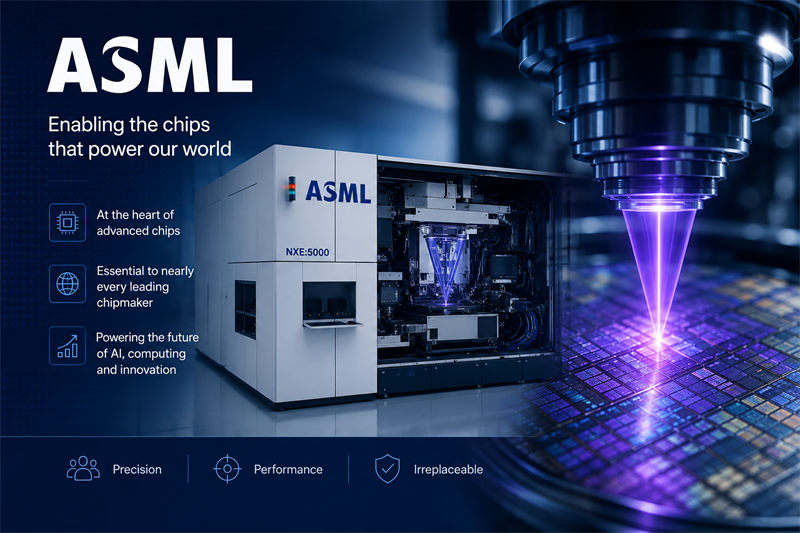
This month, we highlight a recent addition to our equity model and a company emerging as one of Europe’s most important: ASML Holding NV. While much of the attention around artificial intelligence has gone to the companies’ designing chips, building data centers, or developing large language models, ASML sits quietly at the center of the entire ecosystem, building the machines without which the most advanced chips simply could not be made.
What makes ASML so unique is its extreme ultraviolet, or EUV, lithography technology, which uses beams of light to etch incredibly precise circuits into silicon at a scale that is almost hard to comprehend. This mind-blowing process underpins the world’s most advanced chips and has made ASML’s equipment indispensable to nearly every leading chip manufacturer. Exposure to ASML gives us a unique and compelling way to participate in the continued growth of AI, computing power, and advanced memory without needing to place all our bets on which individual chipmaker ultimately comes out ahead.
Click through to watch a short video bringing our team’s fundamental research on ASML to life, created using Google’s NotebookLM. It highlights the company, its unique technology, and why we see it as key to AI and complex computing growth.
World Cup Fever Meets World Cup Tech
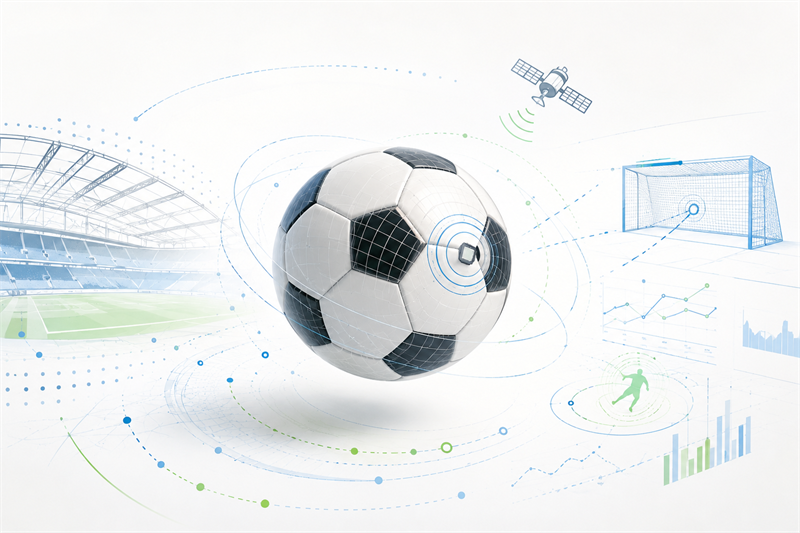
With World Cup fever sweeping across Vancouver, Canada, the United States, and Mexico this month, it has been hard not to get caught up in the energy of it all. Beyond the action on the pitch, the tournament is also a remarkable showcase of the infrastructure, engineering, and technology required to stage an event of this scale across three countries.
For those who cannot get enough, the video below looks behind the scenes at some of the technology helping shape the 2026 FIFA World Cup. From custom-built stadium pitches and high-speed player tracking to sensor-equipped match balls and automated camera systems, it offers a fascinating look at how the game is being played, officiated, and experienced in a new era.