2025: The Year AI Took the Wheel
JACK JAMES - Nov 12, 2025
- Estate Planning
- Investment Services
- Portfolio Management
- Special Reports and Newsletters
- Wealth Management
With the end of 2025 on the horizon, it’s worth pausing to take stock of another eventful year in markets. As we move through mid-November and into third-quarter earnings season, the prevailing theme across North American stock and bond markets remains one of strength. And while much can happen in the final six weeks of the year, it’s hard to look at the below chart and conclude that 2025 has been anything but a success.
.png)
Of course, calling 2025 a success doesn’t mean it has been a walk in the park. Cast your mind back to the start of the year - policy chaos, mixed messages, and bouts of uncertainty tested investors’ patience in ways we hadn’t seen since the pandemic. A wave of selling pressure in those early months left even the steadiest hands a few shades greyer (I can attest).
Yet, as so often happens, with discipline, patience, and a steady hand at the wheel, the market’s resilience shone through - powering a sharp V-shaped recovery and rewarding those who stayed the course. It’s never easy to quiet emotion and bias in the moment, and for that, we tip our hats to all of you.
The Defining Theme: AI and the New Capex Supercycle
If the first half of 2025 was defined by turbulence, the second half has been shaped by a single dominant narrative: Artificial Intelligence ("AI"). The story of AI has evolved quickly - from the fringes of science fiction to the boardrooms of nearly every major institution on the planet (ours included).
What we’re seeing power markets today is what many now call the “AI Capex Supercycle” - a global surge in investment in data centers, infrastructure, chips, and energy. The numbers are staggering - multi-trillion-dollar commitments - and they’ve sparked lively debate about both sustainability and long-term return on that investment. That debate will likely continue to dominate headlines well into 2026 and beyond.
These conversations, particularly those invoking fears of a “tech bubble 2.0”, are understandable. But in my view, they often miss the forest for the trees. Having lived through previous technological inflection points, I see more meaningful parallels not with the manic dot-com crash of 1999-2000, but with the late 2000s and early 2010s. Back then, as a young analyst covering technology themes few yet grasped, I saw firsthand how often innovation is misunderstood on Wall Street. Appetite for Google’s IPO was lukewarm, Netflix was dismissed as a passing fad, and Facebook was mocked for spending $1 billion on a photo app. In hindsight, those doubts seem almost absurd - and they’re just a few examples. Today, we hear echoes of that same skepticism - questions about whether NVIDIA can maintain its lead in GPUs, or whether the massive infrastructure bets by Google, Amazon, and Meta will ultimately pay off.
Understanding the Technology Before the Numbers
In moments like these, it’s vital to approach these investments not solely from a financial perspective, but from a technological one - understanding what is being built and why.
The goal, as it’s been articulated by the visionaries leading this movement, is nothing short of Artificial General Intelligence (AGI): systems capable of matching human intellect across domains. Beyond that lies super-intelligence - systems that surpass the sum of all human intelligence. The motivation isn’t dystopian; it’s practical. AI at this scale aims to improve existing business processes - making them faster, more efficient, and more creative - while enabling scientific and societal advances that are currently beyond our imagination. Central to this pursuit is what Silicon Valley calls the Scaling Hypothesis - the belief that by scaling compute (essentially, the raw processing power behind AI systems), intelligence itself will continue to improve and bring about these breakthroughs. It’s this thesis that underpins the current investment wave and the reason we’re seeing unprecedented capital commitments in data centers, semiconductors, and energy infrastructure.
But there’s a broader force accelerating this trend - one that sits outside company balance sheets and quarterly results. AI has quickly become a matter of national strategy, particularly in the intensifying competition between the United States and China. Both view technological leadership as central to future economic and geopolitical influence. In that race, slowing down simply isn’t an option. The risk of falling behind carries far greater consequences than the risk of overinvestment, and that geopolitical pressure acts as a structural tailwind behind continued innovation and capital investment.
With that context, the pace of progress starts to make more sense. When you combine the technological reality of scaling, the corporate drive to stay ahead, and the geopolitical pressure not to fall behind, you get a set of forces all pushing in the same direction - making continued advancement not just likely, but inevitable.
Looking Ahead to 2026
We’re already seeing the early signs of what this next chapter may look like. Throughout 2025, AI models have begun to challenge human capability at the upper echelons of mathematics, physics, and scientific research. It’s not hard to imagine a near future where AI contributes directly to major breakthroughs - reshaping industries and accelerating human progress
As we turn toward 2026, we remain grounded in understanding what’s unfolding - and confident in how we’re positioned to benefit. Our focus stays on the companies powering this transformation: those building the hardware, powering the data centers, and deploying AI to sharpen their competitive edge.
Progress, of course, never arrives quietly. The path toward more capable AI will bring challenges - labor shifts, regulatory friction, and societal adjustment among them. There will be winners and losers. But the pace of innovation won’t slow; it will continue to accelerate. And as it does, our job remains unchanged: to keep you on course through the noise and positioned to capture the benefits of this extraordinary technological and economic shift.
Here’s to staying disciplined, informed, and optimistic as we close out another remarkable year.
- Jack
Unsigned but Binding: How a Draft Will Revoked a Signed One

Every so often, a case comes along that stops you in your tracks – not because of its complexity, but because of how easily it could happen to anyone. Cooper Estate (2024 BCSC 218) is one of those stories.
Donald Cooper was a lawyer who had taken steps to plan his estate. In 1989, he signed a will that left his assets to his stepchildren from a previous marriage. Decades later, in 2017, he decided to make changes and asked his law partner to prepare a new draft. He reviewed it, set it aside for later, and never signed it. When he passed away, both the signed will and the unsigned draft were found together among his papers.
What the Court Decided
Under British Columbia’s Wills, Estates and Succession Act (WESA), the court can sometimes recognize documents that express a person’s intentions, even if they weren’t formally signed. In this case, the court found that the 2017 draft showed a clear intention to replace the old will. However, because the draft was never signed, it wasn’t valid on its own. The old will was revoked, but the new one wasn’t enforceable - leaving Mr. Cooper without a valid will. His estate was distributed under B.C.’s intestacy rules.
Why This Story Stands Out
It’s an example of how a simple oversight can lead to unexpected results. A draft that was never meant to take effect ended up cancelling a valid will. Many people intend to “get around to it” later - but as this case shows, the in-between stage - when one plan is abandoned and the next isn't finalized - can leave an estate in limbo.
A Few Practical Steps
- Once your will reflects your wishes, make it official by signing it with proper witnesses.
- Keep only the most recent version and destroy or clearly mark older drafts.
- Tell your executor and family where your current will is stored.
- Review your plan periodically, especially after major life changes.
Final Thought
Cooper Estate shows that even with the best of intentions, an incomplete plan can cause confusion and unwanted outcomes. Taking the time to finish what’s started helps ensure your affairs are settled the way you intend.
- Alysha
Independent. United. Unstoppable:

As a follow-up to our July note, we’re pleased to share that the acquisition of Richardson Wealth by iA Financial Group has officially closed. For you, as we said then, it remains business as usual - same team, same level of service, same independent approach.
What does change is the scale behind us. With the transaction complete, the combined organization now forms the largest independent wealth platform in Canada by assets under administration. That added strength will support better technology, deeper resources, and an even more resilient foundation for the years ahead.
We’ll continue to share updates as they come, and as always, thank you for your trust in our team. If you’d like to read more about the announcement, you can do so here.
A Cosmic Mystery in Motion:
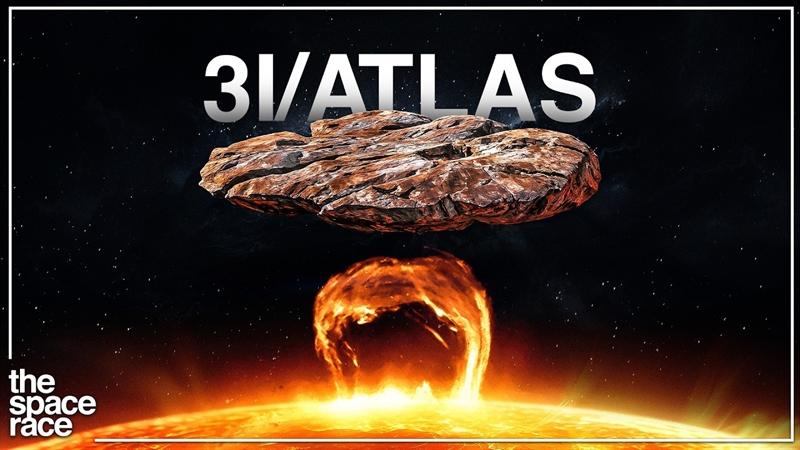
Every so often, something drifts into our solar system from far beyond it - a true interstellar visitor. Only a few have ever been confirmed, and the latest, 3I/ATLAS, has quickly become one of the most intriguing.
First spotted earlier this year by the ATLAS survey telescope in Chile, 3I/ATLAS immediately stood out. It glows a vivid green without the carbon compounds that normally create that colour. It releases heavy metals like nickel at distances where those materials should still be frozen. And its movement through the solar system is unusually smooth and steady, lacking the small nudges we typically see as sunlight pushes on a comet.
As it travelled inward, its orbit carried it directly behind the Sun from Earth’s perspective, temporarily blocking observations during a key part of its journey. It has now re-emerged and is heading back outward, creating a new window for telescopes to study it again. NASA captured high-resolution images during this period, but their release has been delayed by the U.S. government shutdown, leaving researchers waiting for the most detailed look we have so far.
The leading theory is that 3I/ATLAS is an interstellar comet with unusual chemistry - but several of its behaviors remain unexplained, which is exactly why it has astronomers so intrigued.
Below we've linked a short video that walks through the earlier theories and why this object is so unusual. It’s a couple of weeks old now, but still a great primer if you’re curious about what exactly is drifting through our cosmic neighborhood.